

DesignShifters Archetypes
Royal College of Arts | London, UK 2025
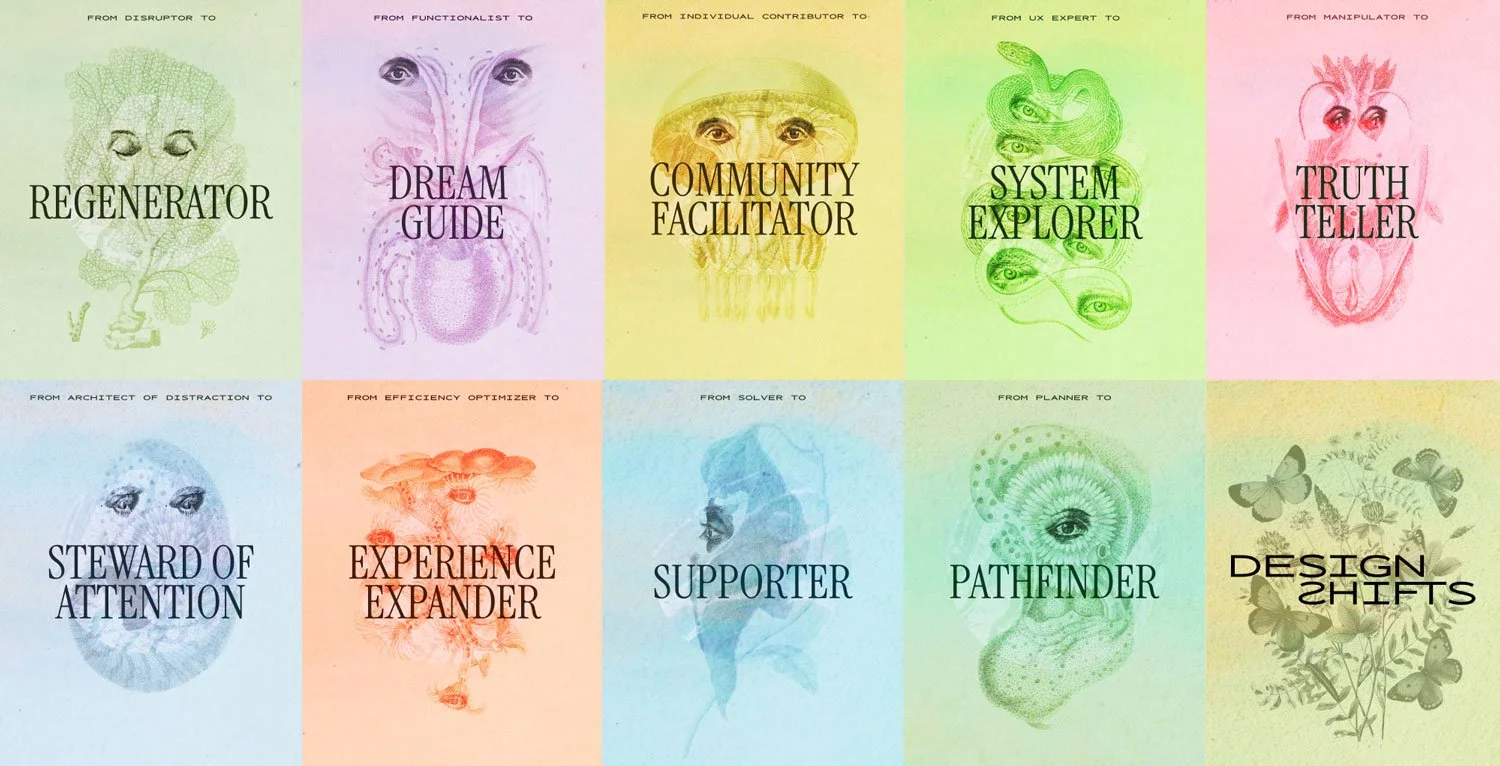
What are the future roles of designers in a world that doesn't need more things?
Fall 2025, I hosted my first official DesignShifts workshop together with Hosan Lee (with great support from Elise Hodson and team) at Royal College of Art.
Part of imagining a better future for and through design means rethinking the shifting roles within our profession, and that's what we explored together.
For decades, we've been defined by what we produce: pixel-perfect interfaces, striking visuals, physical products. We've been neatly categorized as interaction designers, fashion designers, communication designers, and more.
As we navigate climate collapse, deepening inequality, democratic erosion, and a mental health crisis, these roles feel insufficient. And in many cases, they're complicit in fueling the very problems we claim to solve.
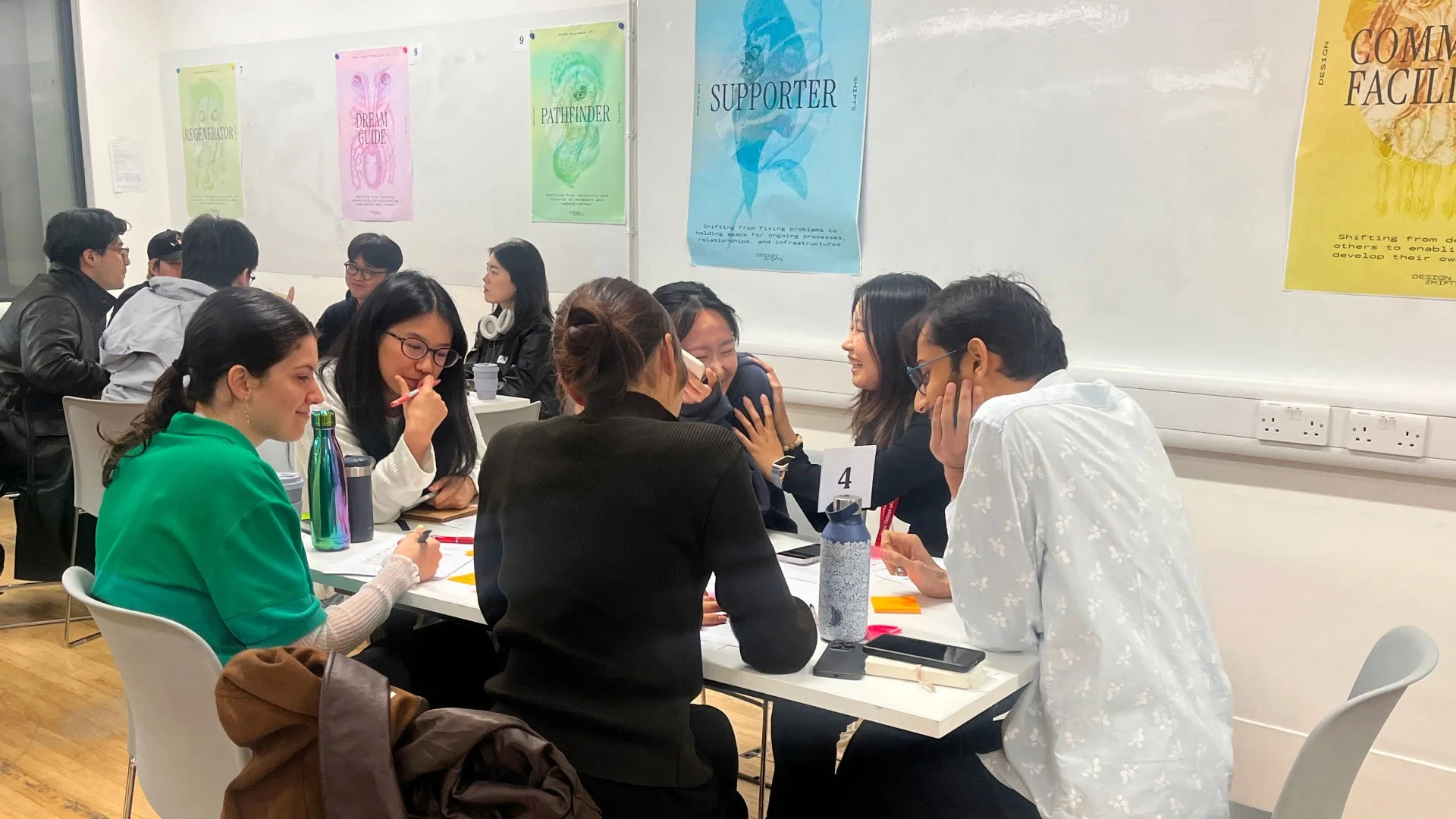
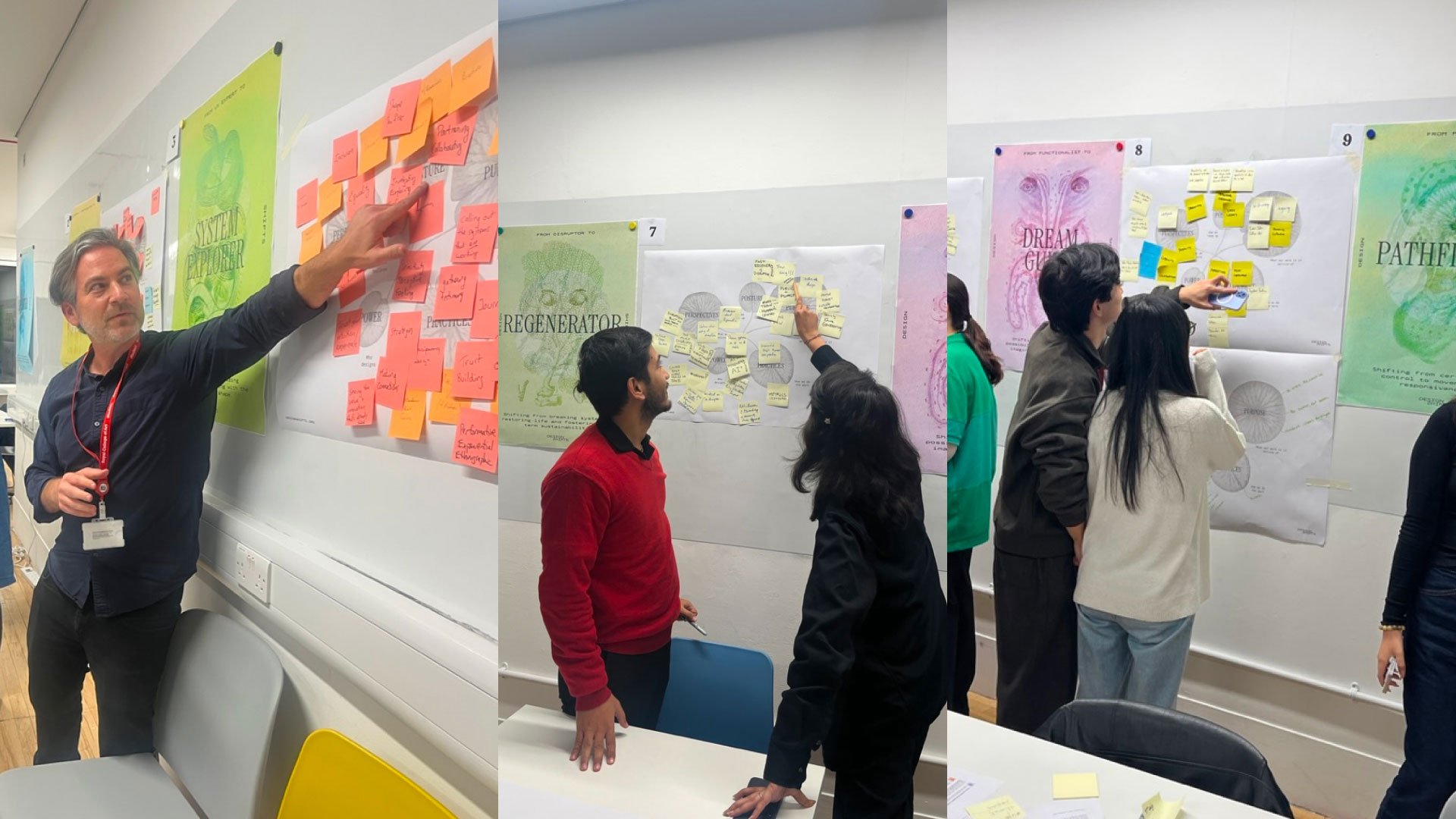
In the workshop, we explored new archetypes for designers. These archetypes support a future that is just, caring, and pluriversal. They challenge systems and illuminate design's power as a practice of connection, regeneration, and care.
The workshop was an opportunity to gain perspective and start developing these archetypes alongside talented practitioners. Over the next few weeks, I'll share these emerging roles in more detail as a way to tap into our collective knowledge. Want to chat more about it or working on something similar? Reach out 🌱
Here are a few questions and reflections that have stayed with me after our session:
On power: When we think about power, we should ask who is being exploited. Is it the workers, the consumers, the community members, or perhaps all of them at once? Identifying this can help us disrupt harmful power structures and uncover deeper truths.
On disruption: The discussion about what it means to be a disruptor also stood out to me. Someone asked if being a disruptor is the opposite of being a regenerator. The more I think about it, the more I believe disruption can also be a positive force, especially when it challenges the status quo in the service of renewal or justice.
On participation: We emphasized that when people are given power, they want to contribute, as shown in the example of the Russian bill redesign. This reminds us that participation is often less about mindset and more about access.
On dreaming: Dreamers are leaders. We all have the capacity to dream and, in doing so, we develop the capacity to lead.
